skip to main |
skip to sidebar


 ASAM, Egid Quirin
(b. 1692, Tegernsee, d. 1750, Mannheim)
Biography
Bavarian architect and decorator who worked together with his brother Cosmas Damian (1686-1739). They studied in Rome (1711-14) and developed further the dramatic effects of light and illusionism with which Italian Baroque artists, notably Bernini and Pozzo, had experimented. Both men worked as architects, but Cosmas Damian was also a prolific fresco painter, and Egin Quirin was a sculptor and stuccoist. They worked best as a team, and their ecclesiastical buildings were the supreme expression of the Bavarian delight in decorative display; architecture, painting and sculpture unite to set a scene in which light and colour are the chief actors. The best known of their churches is that of St John Nepomuk, Munich (1733-46). The brothers themselves paid for the building (which was attached to Egid Quirin's house), and it is often referred to simply as the 'Asamkirche'.


 BELLUCCI, Antonio
(b. 1654, Pieve di Soligo, d. 1726, Pieve di Soligo)
Biography
Italian painter, active also in Austria, Germany and England. He studied drawing with a nobleman Domenico Difnico in Sebenico (Sibenik) in Dalmatia (now part of Croatia, at that time a Venetian colony) and went to Venice around 1675. His first works were influenced by Pietro Liberi, Andrea Celesti and Antonio Zanchi, as is apparent from the large canvas showing St Lorenzo Giustiniani, first Patriarch of Venice, praying for the city's deliverance from the plague of 1447 (c. 1691; Venice, S Pietro di Castello, choir). In the following years, in response to Veronese, his palette became lighter.
The first of his contacts with Austria was made in 1692, when he executed four altarpieces depicting scenes from the lives of various saints for the church of Klosterneuburg (in situ). From 1695 to 1700 he lived in Vienna; he was back in Venice in 1700 and returned to Vienna in 1702. During his years in Vienna he decorated the grandiose ceilings of the Palais Liechtenstein with the Triumph of Hercules and allegorical scenes that look back to Bolognese decorative painters, such as Carlo Cignani. He is recorded in Venice again in 1704, and in 1705 he travelled to Düsseldorf to work for John William, Elector of the Palatinate, a member of the Wittelsbach family; he worked there almost continuously until his patron's death in 1716. Among the paintings executed for John William's country seat, Schloss Bensberg, are the Marriage of John William with Anna Maria Luisa de' Medici and Elector Palatine John William Handing the Baton of Command to his Son (both Munich, Alte Pinakothek). From 1716 to 1722 Bellucci was in England, where he fulfilled several commissions for James Brydges, 1st Duke of Chandos, including the decoration of two ceilings (destroyed) at Cannons, the Duke's country house in Middlesex.
Bellucci is one of the best representatives of the transition from the rhetorical Venetian late Baroque to the lighter style of the 18th century. His work was particularly important for his pupil Antonio Balestra and for the early development of Sebastiano Ricci.


LE LORRAIN, Robert
(b. 1666, Paris, d. 1743, Paris)
Biography
French sculptor. His family were functionaries associated with Nicolas Fouquet, Louis XIV's Minister of Finance, and were ruined by his disgrace. He trained first with the painter Pierre Mosnier, and in 1684 he entered the studio of François Girardon, where he worked under his orders on the execution of the tomb of Cardinal Richelieu (marble, c. 1683-89; Paris, Church of the Sorbonne). He later returned to help Girardon as the principal executant of Girardon's memorial to his wife, the flower painter Catherine Duchemin (marble, c. 1703-07; Paris, Ste Marguerite).
In 1689 Le Lorrain was awarded the Prix de Rome for his relief of the Drunkenness of Noah (untraced) and arrived at the Académie de France in Rome in 1692. Financial constraints and Le Lorrain's difficult character led to the withdrawal of his grant two years later. He worked briefly as an assistant to the French sculptor Jean-Baptiste Théodon before returning to Paris. He left behind in Rome an unfinished marble medallion of Christ in Benediction (Rome, Palazzo Montecitorio).
Back in Paris, he gained some private commissions and joined the Académie of Saint-Luc, because the Académie itself was taking no new members and official commissions were few. Only in 1701 was he received there, on presentation of the marble Galatea (Washington), signed and dated that year, and intended as a pendant to Van Clève's Polyphemus.
He worked for the Rohan-Soubise family, and employed by the Cardinal de Rohan at the chateau of Saverne, for some six years from 1717. Unfortunately, the complete salon he decorated there, under the direction of Robert de Cotte, was destroyed by fire well before the end of the century. The cardinal employed him again in the years 1735-38, this time in exterior decoration of his huge palace at Strasbourg. Apoplexy cut short Le Lorrain's work at Strasbourg, though he seems to have continued to model in Paris.
In his old age, probably around 1736, he created his masterpiece, the Horses of the Sun relief, as decoration of the stables of the Hôtel de Rohan.
He exhibited in the Salon, two small terracotta genre groups ('des Jeux') in 1725, and two terracotta goups ('Groupes de fantasie', lost) in 1737.


BADALOCCHIO, Sisto
(b. 1585, Parma, d. ca. 1619, Parma)
Biography
Italian painter. His early training is thought to have taken place in the Carracci academy in Bologna and with Agostino Carracci, during the latter's years in Parma in the service of Ranuccio I Farnese (1600-02). Following Agostino's death, Badalocchio and his fellow pupil Giovanni Lanfranco were sent to Rome, where they assisted Annibale Carracci on the decoration of the Galleria Farnese and the Herrera Chapel in Santa Maria di Monserrato, Rome (1602-07; now Museo del Prado, Madrid, and Museu Catalunya, Barcelona). Badalocchio's first independent, signed work is an etching after the antique statue of the Laocoön (1606). The following year, together with Lanfranco, he published a series of 51 etchings after Raphael's frescoes in the Vatican Logge.
Annibale's death in 1609 precipitated Badalocchio's return to Emilia. There in 1613 he created his most important work, the frescoes in the cupola and pendentives of San Giovanni Evangelista, Reggio Emilia, a reinterpretation of Correggio's work in the church of the same name in Parma. During the years 1614-17 Badalocchio was again in Rome. Under the influence of Lanfranco, with whom he collaborated on several projects, including the decoration of the Palazzo Mattei di Giove (1615), Badalocchio adopted a more vibrant treatment of light and a freer application of paint. Frescoes with mythological subjects in the Palazzo Verospi, Rome, and the Entombment, a nocturnal scene painted on copper (Patrizi collection, Rome), probably also date from this period.
Though overshadowed by his colleague Lanfranco, Badalocchio is recognised today as one of the artists responsible for spreading the innovations of Roman Baroque to northern Italy.


GIRARDON, François
(b. 1628, Troyes, d. 1715, Paris)
Biography
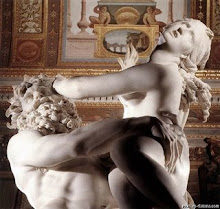
French sculptor, famous exponent of classicism who worked for Louis XIV at Versailles. His most famous sculptures there are Apollo Tended by Nymphs (begun 1666; original grouping altered) in the grotto of Thetis, and Rape of Persephone (begun 1677) in the gardens. His other work includes the monument to Richelieu (1675-77).
He was the most eminent sculptor in France during the last three decades of the 17th century, playing a vital part in the creation of the French classical style and, through his role as dominant sculptor on the royal works of Louis XIV, helping to disseminate this style in France, as well as turning it into a model for emulation throughout Europe.


AMIGONI, Jacopo
(b. 1682, Napoli, d. 1752, Madrid)
Biography
Jacopo Amigoni (Amiconi) was a Venetian history and portrait painter who worked all over Europe in a more or less international style, the Venetian Rococo, with elements compounded from Sebastiano Ricci and French Rococo, and, later, Tiepolo. He worked for some years for the Elector of Bavaria and then came to London in 1730, where he painted several decorative cycles (e.g. Rickmansworth, near London, Moor Park Golf Club) and portraits; though these, according to Vertue, were 'not his inclination - nor Talent'. In 1739 he returned to Venice with a small fortune, and it was he who persuaded Canaletto to visit London (1746). In 1747 he went to Madrid as Court painter: Vertue records that news of his death there reached London just as his finest works - in St James's Square - were destroyed. The altarpiece of Emmanuel Collection, Cambridge, is his; other works are in Darmstadt, London, Madrid, Venice and York.


ALGARDI, Alessandro
(b. 1598, Bologna, d. 1654, Roma)
Biography
Italian Baroque sculptor and architect, born in Bologna. He studied painting, but later turned to sculpture. He executed such marble groups as St Philip Neri and the Angel for Santa Maria del Popolo in Rome and Beheading of St Paul for San Paolo in Bologna. He succeeded Bernini as papal court sculptor in 1644; he designed the Villa Doria-Pamphili and a large bronze statue of Pope Innocent X, now in the Palazzo dei Conservatori, both in Rome. In 1650 he completed the tomb of Pope Leo XI and a huge bas-relief for the altar of Pope Leo I in Saint Peter's Basilica, Rome, representing Leo's confrontation with the warrior Attila the Hun.


 Post
Post


.jpg)